Why Two Shops Selling the Same Product Don’t Get the Same Customers
Why Two Shops Selling the Same Product Don’t Get the Same CustomersTwo shops can sell the same product, at the same price, in the same market, and still get…
Imagicity Art · 12 min read
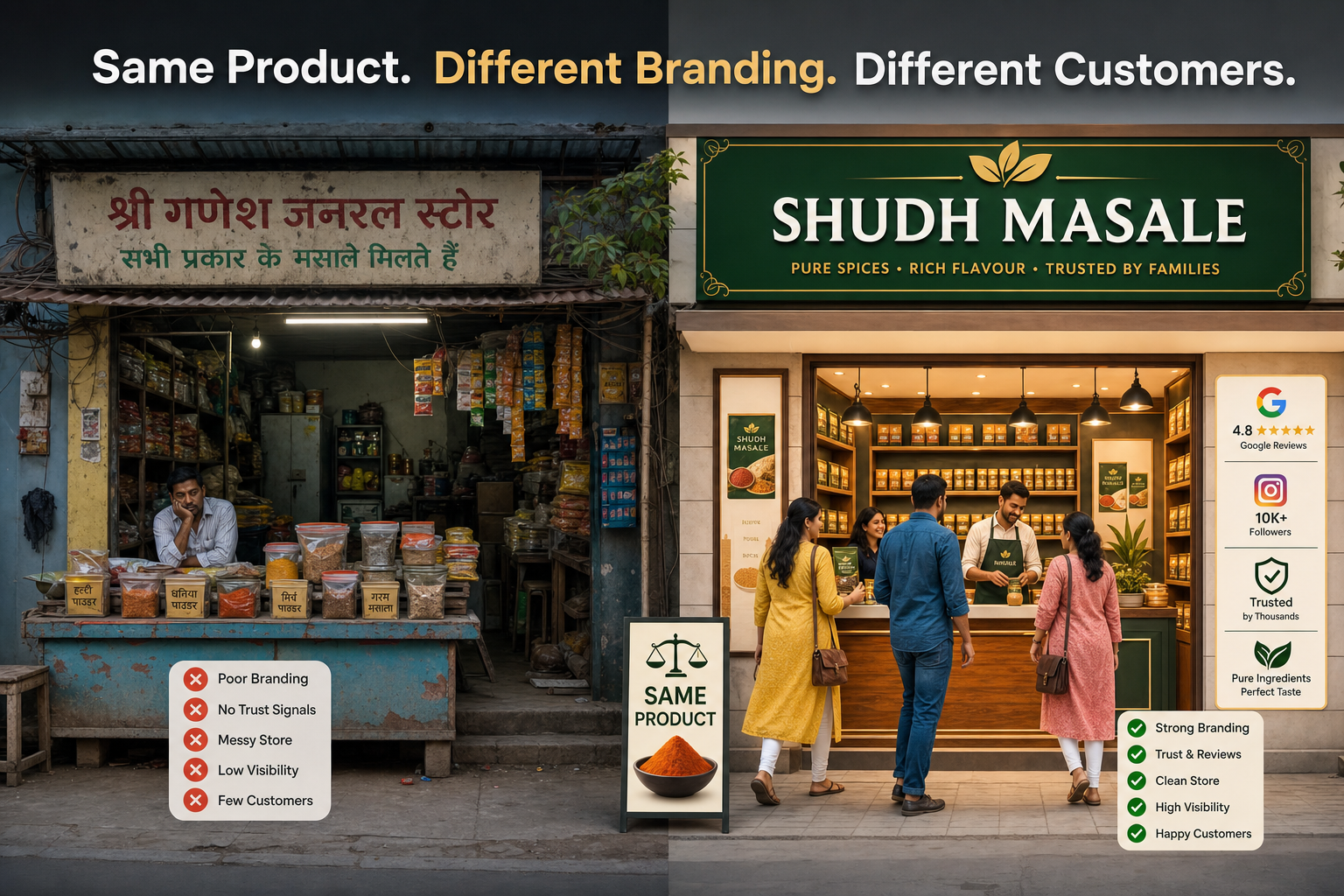
Two shops selling the same product with different branding and customer response
Why Two Shops Selling the Same Product Don’t Get the Same Customers
Two shops can sell the same product, at the same price, in the same market, and still get completely different customers.
One shop has regular buyers. The other shop keeps waiting.
One shop becomes the first choice. The other becomes “woh side wala shop.”
Ayooo, this is not magic. This is branding.
Most business owners think customers only compare price. That is a half-baked assumption. Customers compare trust, comfort, visibility, experience, reputation, and memory. That is why branding matters more than most local business owners understand.
A product may bring attention, but branding builds preference.
If two shops are selling the same product, the shop with better branding usually gets more customers, better recall, and stronger repeat sales.
Two shops can sell the same product, but branding decides which one customers remember, trust, and choose.
Customers Don’t Buy Products Only. They Buy Perception.
Let’s say two shops sell the same shoes.
Same quality. Same price. Same market.
But one shop has clean display, proper lighting, polite staff, good packaging, clear signage, Google reviews, and active social media.
The other shop has dusty shelves, confusing display, no online presence, weak communication, and no brand identity.
Now tell me honestly, where will the customer feel safer?
This is where customer perception enters the game.
Customers may not always say it directly, but they judge a business before buying. They judge the shop board, staff behavior, product display, packaging, online presence, and overall experience.
That judgment becomes trust.
That trust becomes sales.
This is the practical power of branding.
The product may be the same, but customer perception changes the value of the business.
Branding Makes a Business Easier to Remember
A business without branding becomes forgettable.
People may visit once, buy once, and then forget the name.
But a business with strong branding becomes easier to remember because it has a clear name, clear color, clear message, clear design, and clear customer experience.
This is why some shops become landmarks.
People say:
“Go to that red board shop.”
“Go to that premium-looking store.”
“Go to that cafe with the black and yellow design.”
“Go to that shop whose Instagram page looks good.”
That is branding working silently.
Branding is not just a logo. Branding is how people remember you when they are not standing in front of your business.
If your business has no clear identity, customers will remember the product category but not your brand.
That is dangerous.
Because if customers remember only the product, they can buy it from anywhere.
But if they remember your brand, they come back to you.
The Same Product Can Feel More Valuable in a Better-Branded Shop
A ₹100 product can feel like ₹300 when it is presented well.
This does not mean cheating the customer. It means increasing perceived value through branding.
Good lighting, clean shelves, premium packaging, strong visuals, staff confidence, and professional digital presence can make the same product feel more valuable.
This is why malls sell basic items at higher prices than roadside shops.
The product may be similar, but the perception is different.
And perception controls buying behavior.
Strong branding makes a business look more reliable, more premium, and more organized.
Weak branding makes even a good product look risky.
This is where many local businesses lose the game. They say, “Our product is good.”
Fine, bugger, but does your business look trustworthy enough for people to believe that?
A good product with weak branding often loses to an average product with strong branding.
That is not fair, but that is business reality.
This is why businesses need proper brand identity systems, not just random posters, weak logos, and copied Instagram templates.
Better branding can make the same product feel more valuable, reliable, and premium.
Trust Is the Real Difference Between Two Similar Shops
Customers usually choose the safer option, not always the best option.
When two shops sell the same product, customers ask silent questions:
Is this shop reliable? Will they replace the product if something goes wrong? Do they behave properly? Does the shop look professional? Do other people trust them? Can I find them online? Are the reviews good?
These questions build or break brand trust.
Brand trust is one of the biggest reasons two businesses selling the same product get different results.
One shop may sell with confidence because people trust it.
The other shop may keep giving discounts because people are not fully convinced.
Discounts can bring one-time buyers.
Trust brings repeat customers.
That is why branding is not decoration. Branding is a trust-building system.
If your brand does not create trust, your marketing has to work twice as hard.
And when marketing has to work twice as hard, your cost of getting customers increases.
This is where market positioning strategy becomes important. A business must know what it stands for, who it serves, and why customers should choose it over another similar business.
Customer Experience Creates Repeat Sales
The first sale may happen because of the product.
The second sale happens because of the experience.
If a customer enters your shop and feels ignored, confused, or uncomfortable, your product quality may not save you.
But if the customer feels guided, respected, and confident, they are more likely to return.
Customer experience is a major part of branding.
Branding includes how your staff talks, how your shop looks, how quickly you respond on WhatsApp, how you handle complaints, how you package the product, and how you make the customer feel after purchase.
Many local businesses think branding means making a logo and printing a board.
No.
That is only visual identity.
Real branding includes the complete experience around the business.
Your customer should not feel like they are doing you a favor by buying from you.
Ayooo, some shopkeepers behave like customers have disturbed their afternoon nap. Then they cry about low sales.
Customer experience is not extra. It is business survival.
Digital Presence Builds Trust Before the Customer Visits
Today, customers often check a business before visiting it.
They may search on Google.
They may check photos.
They may read reviews.
They may open Instagram.
They may check location.
They may see whether the business looks active or dead.
This means your digital presence is now part of your branding.
A business with a clean Google Business Profile, updated photos, proper reviews, active social media, and clear contact details automatically feels more trustworthy.
A business with no online presence feels doubtful.
This is why digital branding matters for local businesses.
Before the customer enters your shop, your online presence has already created an impression.
If that impression is poor, you may lose the customer before you even meet them.
That is the brutal truth.
Two shops may sell the same product, but the shop with better digital branding gets pre-trust.
Pre-trust means the customer already feels more confident before visiting.
That is a big advantage.
If your business needs stronger online trust, you need proper branding and marketing services, not just random posting and festival graphics.
Customers often judge your business online before they visit offline.
Visibility Creates Choice
Customers cannot choose a business they do not remember.
A hidden business does not get considered.
This is why visibility matters.
If one shop is visible on Google, Instagram, local posters, WhatsApp, word of mouth, and community conversations, it has a stronger chance of becoming the first choice.
The other shop may have good products, but if people do not see it, hear about it, or remember it, it loses.
Visibility is not the same as noise.
Posting random offers every day is not visibility.
That is digital shouting.
Smart visibility comes from consistent branding, useful content, strong visuals, clear messaging, and repeated presence.
A business should not only be seen.
It should be remembered.
That is where branding turns visibility into recall.
Branding Helps Customers Feel the Difference Even When Products Are Similar
Most markets are crowded.
One bakery sells cakes. Ten other bakeries sell cakes.
One cafe sells coffee. Ten other cafes sell coffee.
One clothing shop sells shirts. Twenty other shops sell shirts.
One coaching center teaches students. Many others do the same.
So why should customers choose one over the other?
The answer is branding.
Branding creates difference when products look similar.
It gives the customer a reason to choose you beyond price.
Your difference can come from:
Better presentation
Cleaner design
Stronger customer service
Better packaging
Clearer communication
More trust
Better reviews
Stronger social media
Better store experience
Stronger local reputation
This is why local business branding is important.
Without branding, your business becomes one more option in the crowd.
With branding, your business becomes the preferred option.
Price Is Not the Only Reason Customers Choose One Shop
Many business owners think customers only want the cheapest option.
That is not fully true.
Customers want value.
Sometimes value means low price.
Sometimes value means trust.
Sometimes value means convenience.
Sometimes value means better service.
Sometimes value means premium experience.
Sometimes value means peace of mind.
If price was the only factor, premium brands would not exist.
People pay more when they trust the business, understand the value, and feel good about the purchase.
That feeling comes from branding.
A better-branded shop can often charge more because customers believe they are getting better value.
A weakly branded shop has to fight mostly on discounts.
And once your business becomes discount-dependent, margins suffer.
That is why branding strategy is not a luxury.
It is a profit protection tool.
The Business That Feels Safer Usually Wins
Customers do not always choose the best product.
They choose the option that feels safest.
This is especially true for local businesses.
If one shop looks professional, communicates clearly, has good reviews, shows real photos, provides a better experience, and maintains consistency, it feels safer.
The other shop may have the same product, but weak branding makes it look uncertain.
Customers avoid uncertainty.
They prefer businesses that reduce risk.
That is why brand trust is so powerful.
Trust reduces doubt.
Doubt kills sales.
Simple.
Customers do not always choose the cheapest option. They often choose the safest option.
How Small Businesses Can Use Branding to Get More Customers
If you run a local business, do not overcomplicate branding.
Start with the basics.
1. Make Your Business Easy to Recognize
Use consistent colors, fonts, logo, signage, packaging, and social media style.
If your Instagram looks different every week, your posters use random colors, and your shop board looks outdated, customers will not remember you clearly.
Consistency builds memory.
2. Improve the First Impression
Your shop board, display, reception area, packaging, and online photos should look clean and trustworthy.
First impression decides whether customers feel interested or doubtful.
3. Build a Proper Google Business Profile
Upload photos.
Add correct location.
Add contact number.
Collect real reviews.
Update opening hours.
Your Google profile is part of your digital branding.
4. Stop Posting Only Offers
Offers may bring attention, but they do not build a brand.
Post customer stories, product explanations, behind-the-scenes content, benefits, comparisons, tips, and proof of quality.
Content should build trust, not just shout discounts.
5. Train Staff Behavior
Your staff is part of your branding.
If the staff is rude, slow, careless, or confused, customers will connect that experience with your business.
Branding is not only design.
It is behavior.
6. Use Packaging Properly
Packaging is not waste.
Packaging is a memory tool.
A properly packed product feels more valuable and more trustworthy.
7. Make the Business Message Clear
Customers should quickly understand:
What do you sell? Who is it for? Why should they choose you? What makes you different?
If this is unclear, your marketing will become weak.
Final Thought: Same Product, Different Brand Value
Two shops can sell the same product, but they will not get the same customers because customers do not buy products in isolation.
They buy trust.
They buy memory.
They buy comfort.
They buy experience.
They buy reputation.
They buy perception.
That is why branding matters.
A business with strong branding becomes easier to trust, easier to remember, and easier to choose.
A business with weak branding becomes replaceable.
If your product is good but customers still choose your competitor, do not only blame the market.
Look at your brand.
Your business may not need a better product first.
It may need better branding, better positioning, and better digital presence.
Because in a crowded market, the business that looks trustworthy wins attention.
The business that feels memorable wins repeat customers.
And the business that builds strong branding wins long-term growth.
Same product. Different branding. Different customer choice.
Need Better Branding for Your Business?
If your business sells a good product but still loses customers to competitors, the issue may not be the product.
It may be your branding, positioning, customer perception, and digital presence.
IMAGICITY helps startups and local businesses build sharper brand strategy, stronger brand identity systems, smarter marketing systems, and better customer trust.
For more practical branding, marketing, and business growth lessons, explore Creacity by IMAGICITY.
FAQ
Why do two shops selling the same product get different customers?
Two shops selling the same product get different customers because customers judge more than the product. They judge branding, trust, customer experience, digital presence, pricing confidence, and overall perception.
How does branding help a local business?
Branding helps a local business become easier to remember, easier to trust, and easier to choose. Strong branding improves customer perception and can increase repeat sales.
Is branding only about logo design?
No. Branding is not only logo design. Branding includes customer experience, visual identity, communication, online presence, packaging, trust, and the overall feeling people connect with a business.
Why does customer perception matter in business?
Customer perception matters because people often buy from the business they trust more, not just the business with the best product. Better perception can make the same product feel more valuable.
How can small businesses improve branding?
Small businesses can improve branding by using consistent visuals, improving store experience, building a strong Google Business Profile, posting useful content, improving packaging, and communicating clearly with customers.
brandingretail brandingbrand trustcustomer perceptiondigital brandinglocal business brandingmarketing strategy


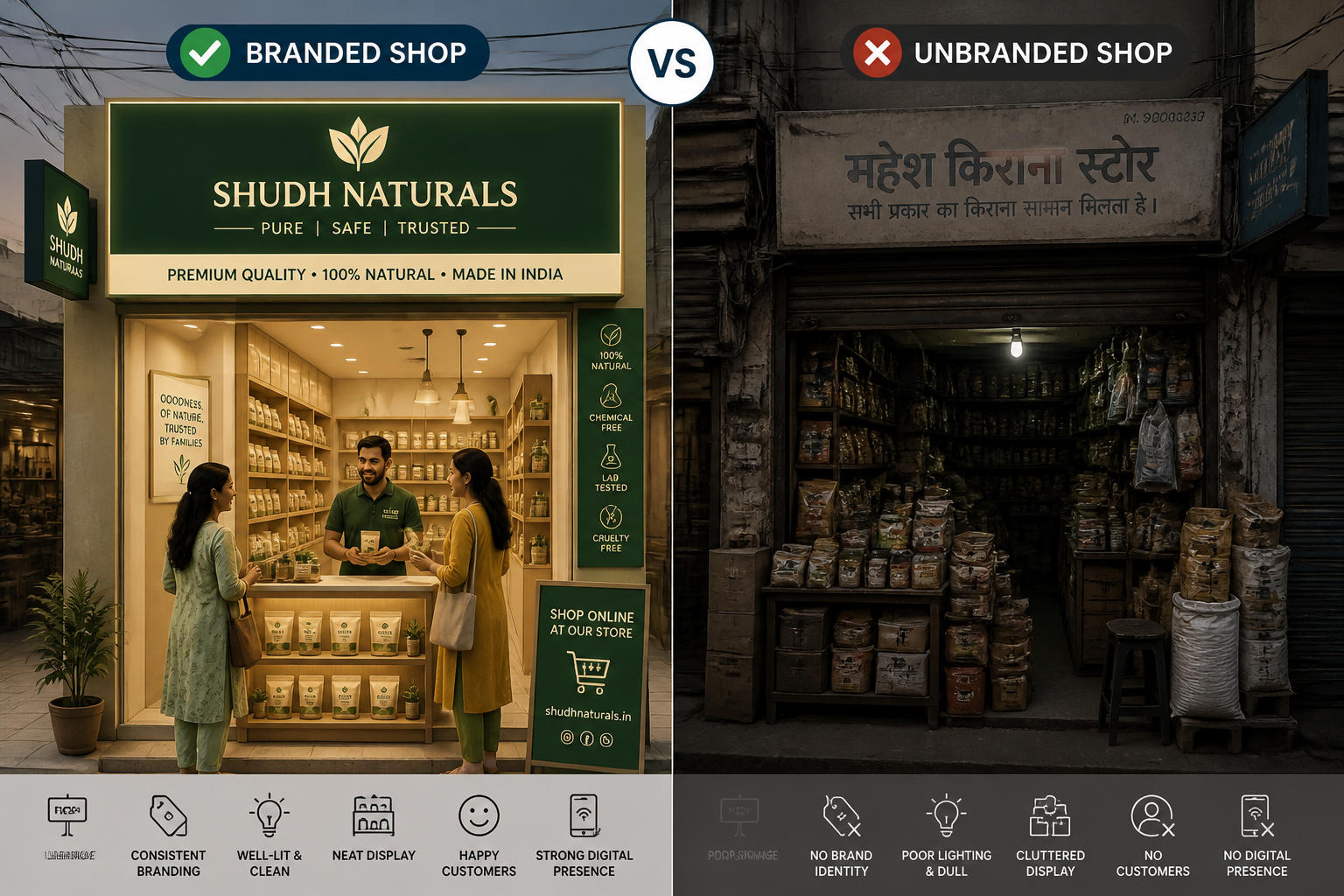 Two shops can sell the same product, but branding decides which one customers remember, trust, and choose.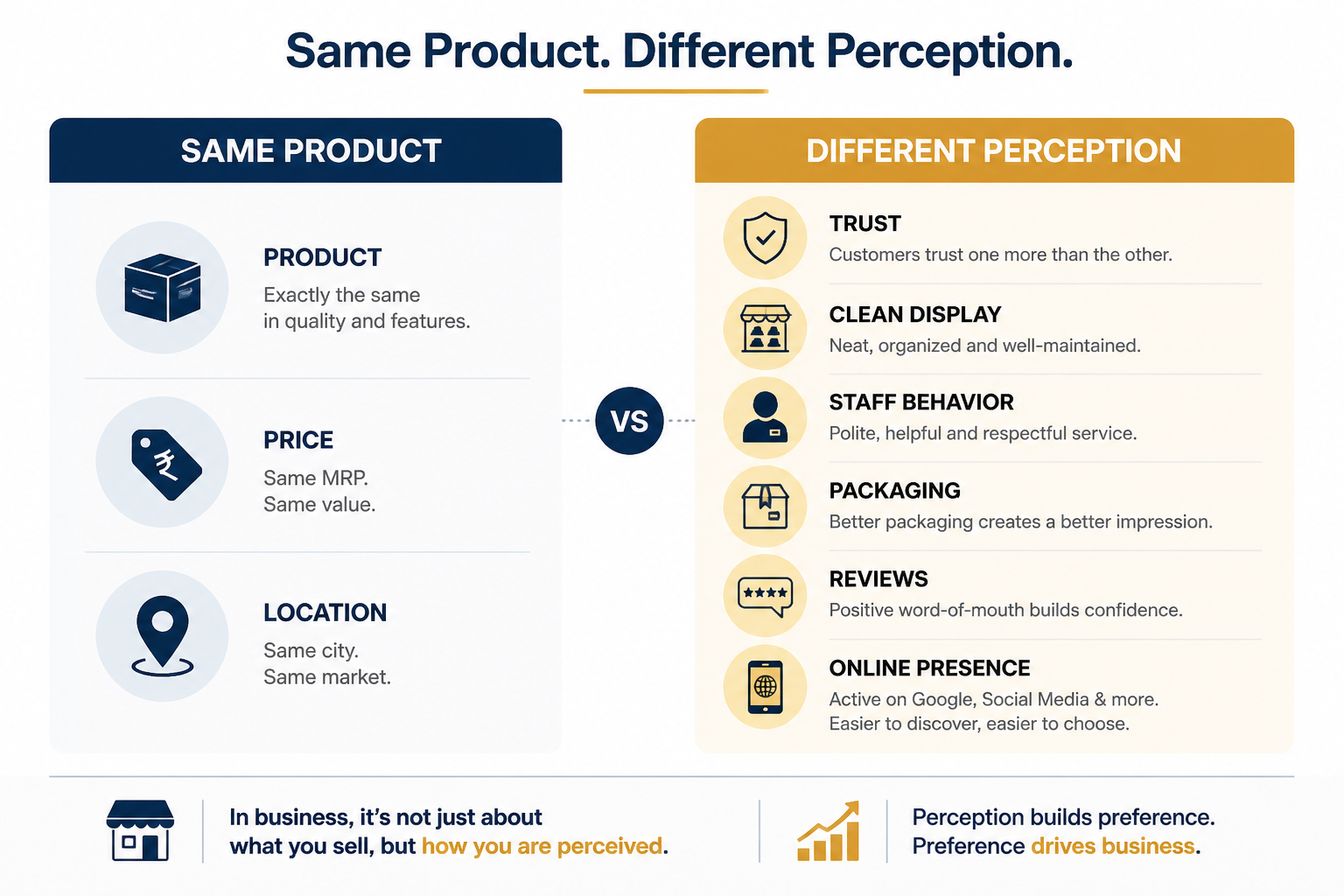
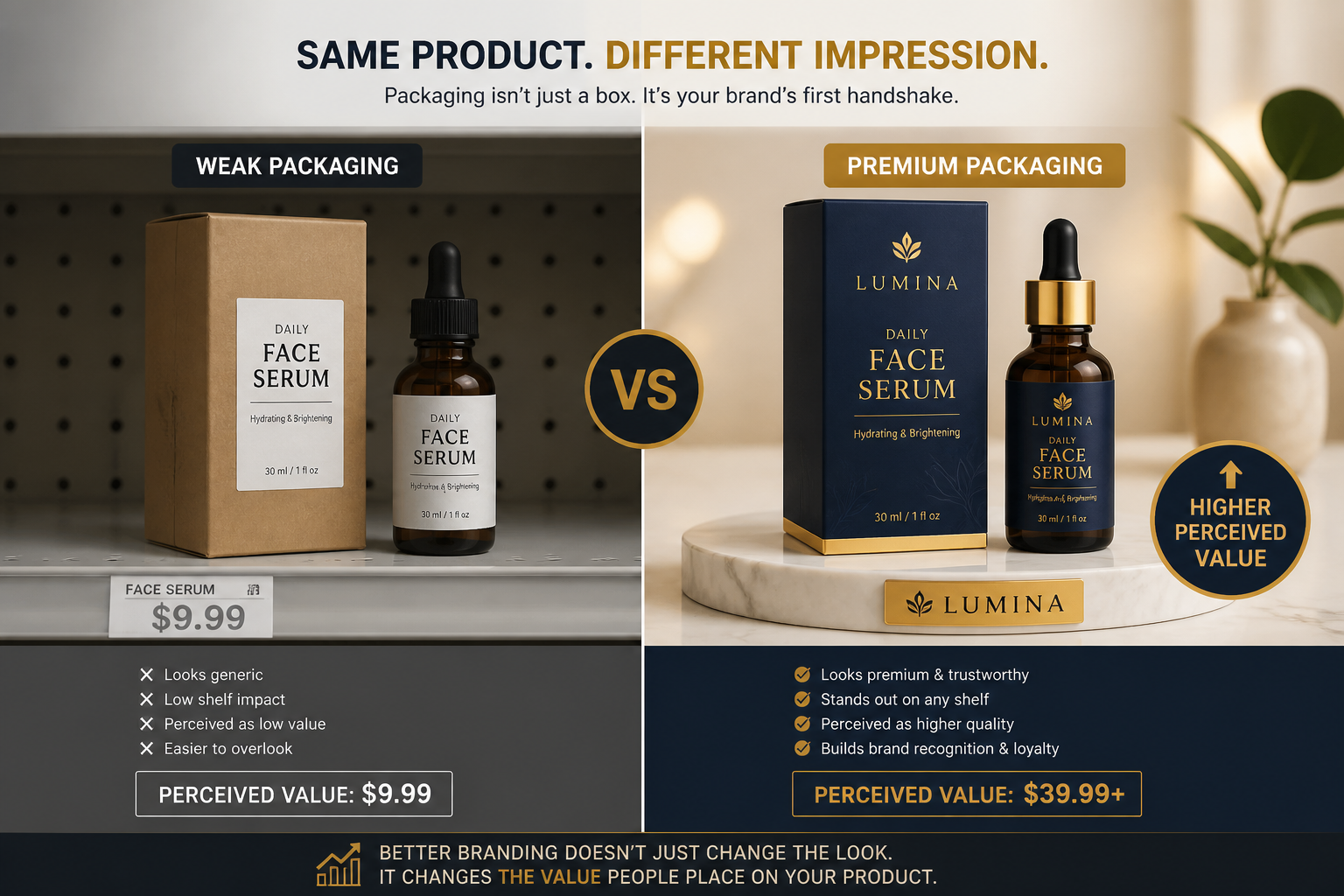 Better branding can make the same product feel more valuable, reliable, and premium.
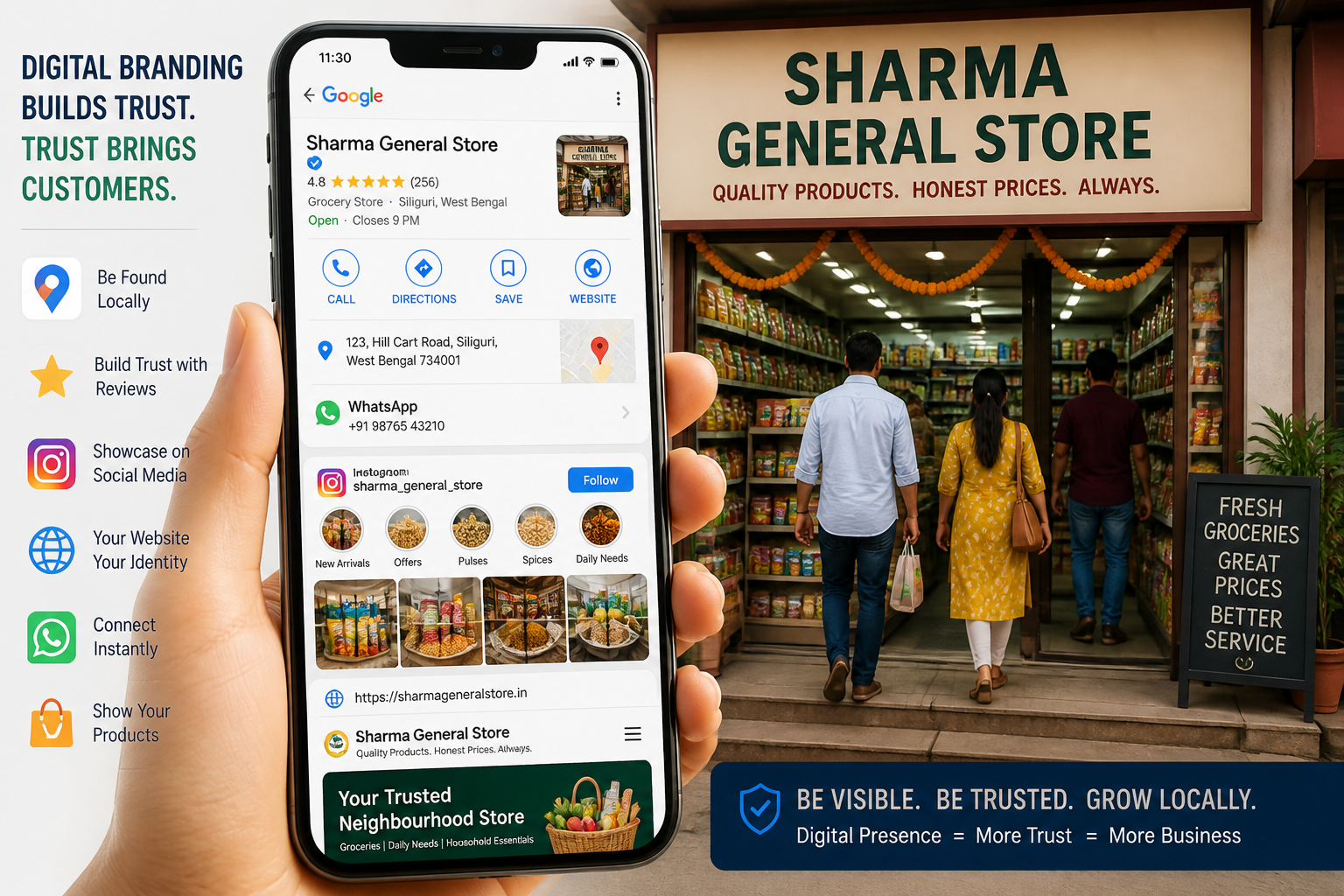 Customers often judge your business online before they visit offline.
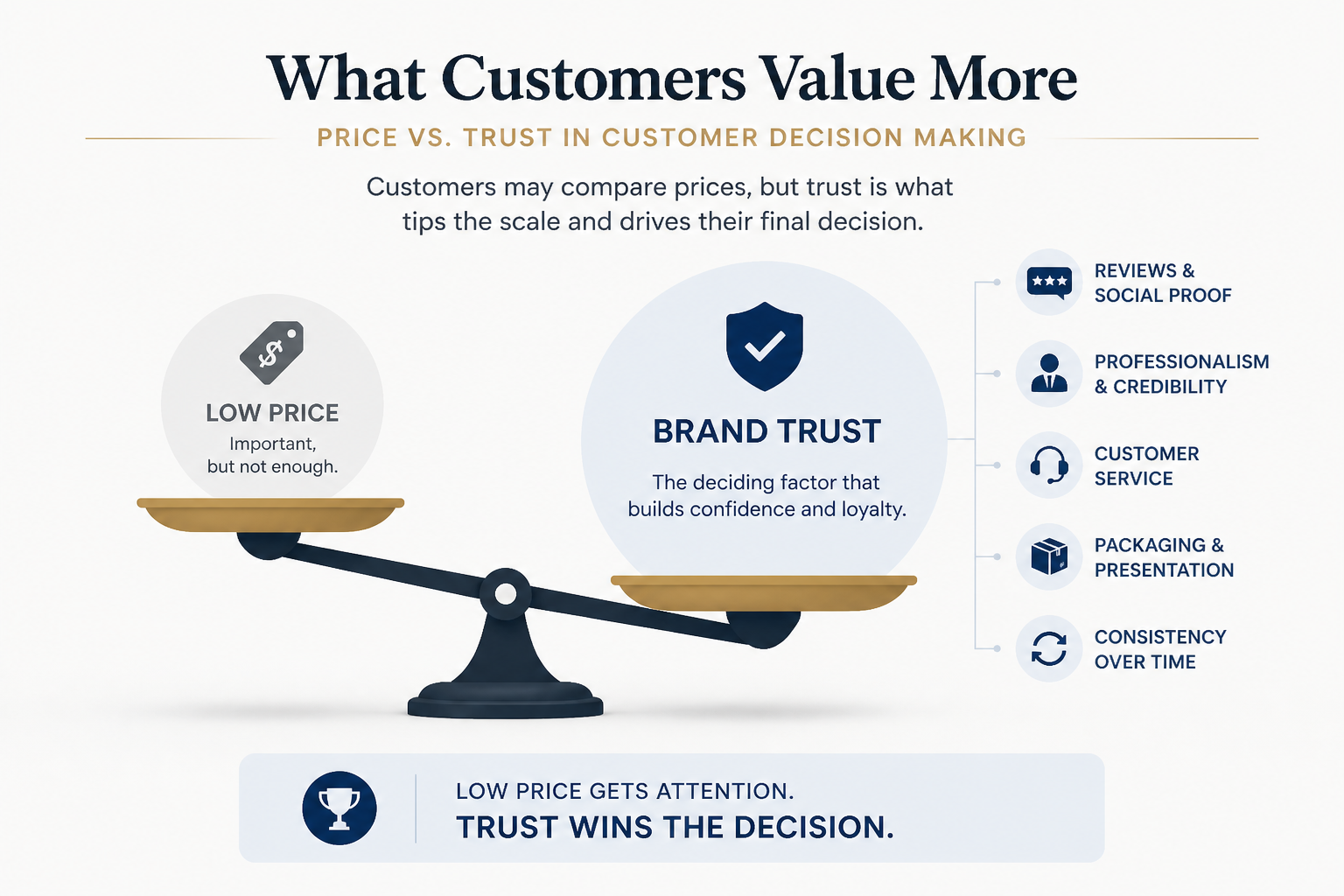 Customers do not always choose the cheapest option. They often choose the safest option.
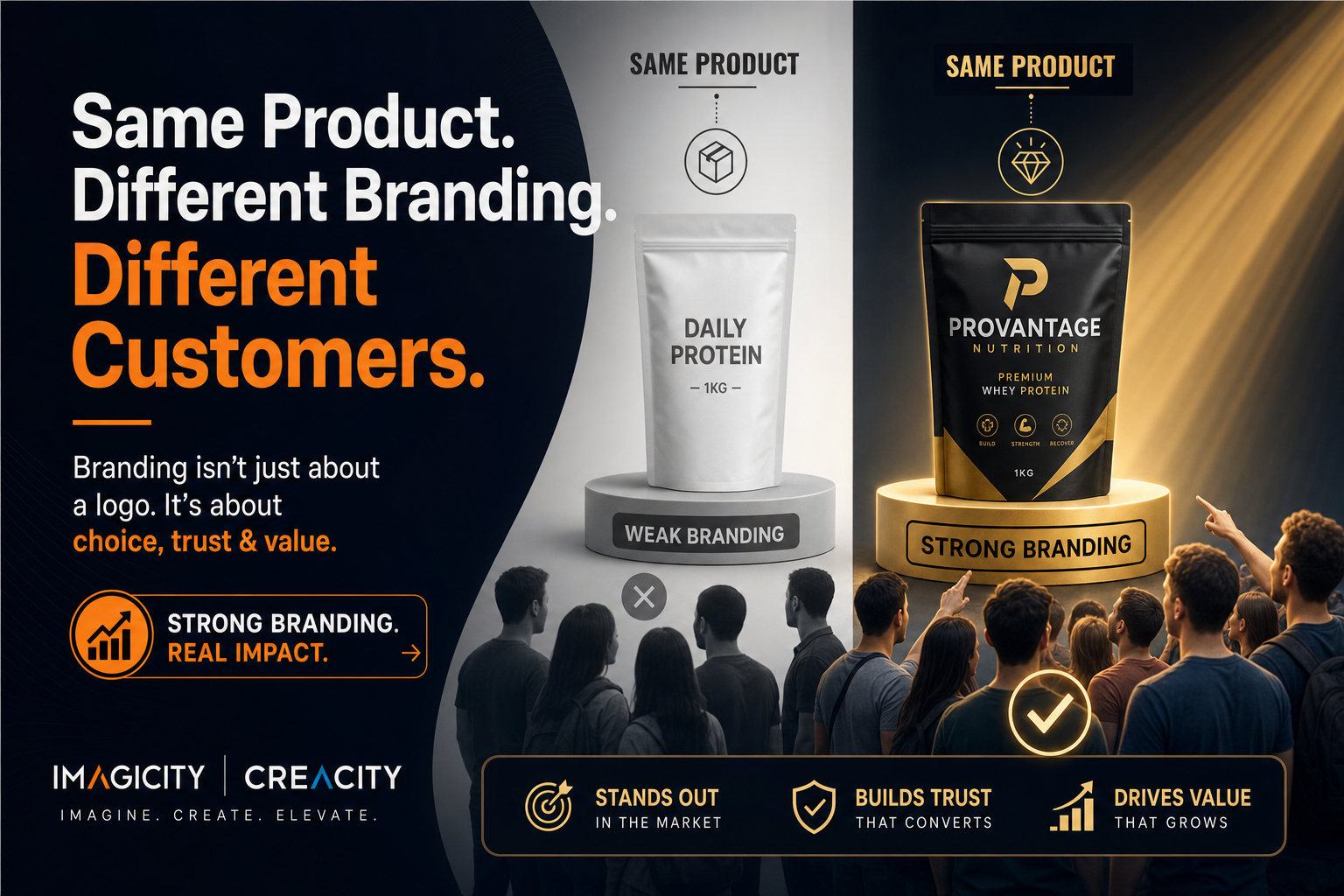 Same product. Different branding. Different customer choice.
Loading comments…